Saturday, April 11, 2020

Taking Your Solo Self on the Road!

I've been posting about solo travel for a while, but some of you may be wondering if it's still for you. Well, here's a good way to try out solo traveling: take yourself on a road trip!


Traveling your country or state by yourself is a good way to acquaint yourself with long periods of traveling alone. Now traveling your own country and traveling a foreign country are two completely different things, but the point of this post is for you to get your feet wet. If traveling by yourself is something you really want to try, this is a more comfortable means of doing so.

Always remember though that solo travel isn't for everyone. So, if you take a road trip on your own and you find you don't enjoy it or can't handle it emotionally, there's nothing wrong with that.

And now, let us begin!

Selecting Your Destination

There are a variety of places you can choose to go to, but if this is going to be your first time, perhaps you should try a place somewhat familiar.

Is there someplace your family visited when you were a kid that you wanted to return to as an adult? Do you want to visit a friend or family member who moved across country and make a journey out of it? These are some options that are a good place to start.

If you want to take it a step further, you can go somewhere you've wanted to go to but never have. Is there a city you've always wanted to check out but your family or friends never vacationed there? Is there a national landmark, museum, historical location, or a sight you saw in a movie or TV episode that you want to see for yourself?

When making your decision on where you want to go, consider a few things, such as distance, gas, if you know anyone near the area you wish to visit, the time of year you're planning to travel, and weather patterns at your destination. Let these considerations help you zero in on where you want to go. And if you already have a region picked out, then start making your plans!

Consider Renting a Car

For this portion, I'm going to use my own experiences for examples. I drove to Las Vegas and back again by myself a few times. Being from Northern California, it was a trip I was able to make in the space of a weekend, only taking about 7 hours to get there and about 8 to get back. Since Vegas isn't that far out, driving there in my own car wasn't that big of a deal.

Now, if I had wanted to take a road trip across the country to someplace like New York, I wouldn't take my car. With a few thousand miles between the West and East Coasts, that drive would take quite a toll on my poor little car!

If making a long road trip like this is what you decide on, seriously consider sparing your car and splurging on a rental. Here are a few reasons why:

Mileage 

How many miles have you already put on your car? Do you have a newer car that you've driven over 100,000 miles already? Or do you have an older make and model that's barely over 50,000 miles? If the former, your car has already been through too much. If the latter and your car is from before 2010, potential car repairs are going to be more costly.

Take a good long look at how many miles you have on your vehicle and consider the terrains you've driven that car over. Only you know your car, so you need to judge for yourself if taking a trip that's over 500 miles one-way.

Tires

I'm sure you know this already, but I'm saying it anyways: tires are expensive. Before taking a road trip of any kind, you should make sure they are properly inflated, have been rotated within at least the last 5000 miles, and are at safety standards with the tread. When planning a long-term trip, you may want to replace those tires before you go.

The thing is, if you do plan a cross-country trip and replace those tires, depending on how far you go and the kinds of roads you'll be driving over, it's possible that you may need to replace at least one of them again when you get back.

In this case, we'll use a hypothetical scenario courtesy of Google Maps: you plan a road trip from Los Angeles, California to Miami, Florida, and you need your tires replaced before the trip. You will be driving 2802 miles for the shortest route, and that route will take you through the southwestern states where the roads are rough. By them time you return home, in just getting there and back again the round trip miles (not including any driving around any cities you'll need to stop in for food, gas or visits) is 5,604 miles.

For this hypothetical situation, we'll estimate that the tires you buy prior to the trip are good for 65,000 miles and use the average price provided here of $139, plus a protection plan of an additional $25. You're looking at forking out $581 for tires before your trip, and an oil change would be highly advised, or maybe even a tune up if your car hasn't had one in a few years (gotta make sure those spark plugs are still good!). That's a pretty high bill when you want to get out of town!

Now if you chose a rental car instead, for which case I selected that it would be picked up at LAX airport using Expedia, you can rent a decent car for as low as $5 (likely subject to go higher after the current Coronavirus situation). If your road trip goes 9 days, you're looking at a $79 including all fees and taxes but not including collision protection. Even then, the price is still a steal compared to the price of tires and any other maintenance or repair jobs needed beforehand.


Crazy at how much those tires can set you back, huh?

Gas

It's pretty nutty, but there's a huge difference in gas prices across the USA. Depending on the model of your car and how old it is, the variation on how good your gas mileage is cannot be calculated. One thing though: car rentals usually have decent gas mileage on them. When traveling through North Carolina with a friend for 5 days last year, we drove our rental car all over the western side of the state (and accidentally went to South Carolina at one point) and only filled up once. Had that been my car, we would have filled up twice at the very least.

Gas prices vary by the states, and if you're on the West Coast, you're looking at some of the most expensive in the country. Then there are remote states like Nevada where you can go 100 miles between gas stations. You may be driving a hybrid vehicle, but a rental would still probably decently match that type of mileage.

Try to calculate how many miles will be driven round trip when you're selected your destination. If your own car averages 30 MPG, holds 13 gallons of gas, and your round trip is estimated to be 2000 miles, you can expect to fill up at least 5 times. Let's say that the average for gas at the time of your trip is $2.59, you're looking at approximately $33.67 each time you fill up, with an estimated total of $168.35 for gas alone.

Using this website for our next example, the best rated rental car was a 2013 Nissan Altima averaging 42.5 MPG. If we go based on the gas tank reported to hold 18 gallons, you can expect to fill up at least 3 times for a 2000 mile round trip. As used in our previous example, if the national average for gas is $2.59, the amount you can expect to pay for gas is $139.86.


That amount may be just under $30 cheaper than if you had to fill up 5 times, but it also saves time. When your gas tank is getting low you need to actually find a gas station to fill up at, and if you're in an unfamiliar area it could take you a few minutes to find a place to refuel. When it comes to travel you want to spend as little time as you can on things that will detract from your trip, and filling up your gas tank is one of those things. If skipping time to fill up is doable, I say go for it.

Ultimately, a rental car may be better for you in manner of time and finances. Take the time to consider if this is the best course of action in your vacation. Time and money are most important when you're on holiday. And, in the unlikely event there's an emergency and you need to get home pronto, you can take your car to the local rental lot of the same company you got yours from and fly home!

Booking Your Lodging

If you're not used to being on your own, be prepared to experience some extreme loneliness. Driving by yourself can open your eyes to the loneliness of the open road and staying at an unfamiliar hotel so far from home can sometimes amplify those feelings. If you're lucky enough to have friends living along the route you're traveling, I'd definitely say go for it, but if you want to train yourself to become a solo traveler, the best way to become ready for that is to spend time in a hotel alone.

When booking your hotel, select your favorite booking site, but also open a few more tabs on your computer and pull up Yelp, TripAdvisor, and Google Maps.


Now that you have your tabs open, consider the type of lodging you want to stay at. There are several options available, and you'll need those tabs to help you with your research.

Airbnb

I personally have never tried Airbnb but I do plan to give them a try in the near future just so I can post about my experience. The only thing I would suggest doing since I have heard both rave reviews and complete horror stories about people who used Airbnb, I would highly suggest looking at all the comments on the property.

One of the major perks of this site though is that many of these properties offer the same amenities as hotels and you don't have to share with so many other people. You can even book entire homes through here if you're with a group! That kinda goes against the point of my entire blog, but it's still a cool tidbit of information. Moving right along...

Hostels

Hostels tend to be the cheapest of the options available, but it's mostly because that you're sharing one room with strangers. I myself have stayed in a hostel both on my own and with tour groups, and all the other solo lady travelers I've spoken to who have stayed in hostels had mostly positive experiences.

The accommodations are usually simple: the rooms usually house 4-8 people with bunk beds and secure lockers for your belongings, and a bathroom for each room. Hostels also promote social activities, and will often times have game rooms, rec rooms, bars, or even escape rooms (that one may just apply to the one I stayed in when I visited Rome though). Kitchens are also usually part of the experience.

Though it's very understandable to be iffy about hostels, they are almost always an extremely cheap alternative. If you're strapped for cash, consider a hostel as the primary option. For any additional questions about hostels, check out this website here.

Bed & Breakfasts and Inns

Now these are different from hotels and motels, mostly due to the fact that they are usually run independently and have a homier feeling about them. B&Bs are up front about what they're offering: a place to sleep and breakfast in the morning. Inns are much the same but also offer more services, such as more meals and options for local attractions.

Both types of lodging are perfect for a single overnight stay but tend to have fewer rooms available and can cost just as much as a regular hotel room. However, if this is your first time traveling alone, these options are more than just a business, they're family run. There's nothing wrong but being apprehensive about staying by yourself for the first time, so if you want to find a place to stay that is meant to feel a little more intimate, you may want to select one of these two options.

Camping and Cabins

If you're feeling particularly gutsy on your first even solo road trip, how about booking a campsite or a cabin?

Reserving a camp site by yourself is essentially the most hardcore you can go if you're looking to start solo traveling. If you have the room in your car, bring a tent! Or just a sleeping bag and sleep under the stars (yes, I've done that before!)! Or, maybe you've decided to rent an RV for your trip (why not?), book that site and experience nature firsthand. Just keep in mind that the bathrooms tend to be drafty, showers aren't always available, and there could be bears in the area. This is seriously badass if you opt to do this!

On the other hand, some camp sites offer cabins. Cabins are usually charged based on occupancy, so renting one for just yourself may be a bit costly, but it's private and remote, and there are usually facilities with decent plumbing and showers.

If your trip is going to take you through more remote areas, consider camping to fully immerse yourself in the feeling of being truly alone. This is a good way to mentally prepare yourself if you choose to travel by yourself outside of your home country.

Hotels and Motels

These two are the most popular options (which don't need much explaining) mostly because they tend to be cheaper in the long run and sometimes have rewards programs that can open you up to exclusive perks for your current or future stays. Motels tend to have fewer amenities and the rooms are easily accessed, whereas hotels have more security, nicer arrangements, and sometimes waffle makers. Waffle makers are always worth it!


For the most conventional choices, the tried and true lodgings are the standard hotels and motels. But seriously, it's the waffles that sell me every time.


And now, making the selection...

I'm back to the point I made earlier about using your computer and opening up tabs for Yelp, TripAdvisor and Google Maps. For the sake of this example, we'll go with a hotel as the choice for lodging on the road trip, and I'll continue using Expedia as the booking site.

One thing I would like to point out: there are several application extensions that you can use while searching for your ideal hotel stay. You can use Swagbucks, Honey, Wikibuy, or any other add-on to find the best deals and earn some rewards for yourself! For the record, some of these applications have access to the same booking sites, and you can only use one, so make sure to check all the discounts available to find which one will bring you the most savings.

So now, we take a look for a hotel on Expedia. The reasons why you'll want to extra tabs open is to double check on the reviews. No hotel, motel, B&B, etc. will have all glowing reviews, and sometimes there will even been hotels that will scam their lodgers. Check the reviews for your selected hotel on Expedia (or whichever booking site you prefer to use since Expedia's not paying me to promote them), then check them on Yelp, and next on TripAdvisor. This may take some time, but you want to get the best deal.

And no unexpected surprises!

The reason why you'll want Google Maps as well is to check on the location. You want to take into consideration any shopping centers, restaurants, movie theaters, bars, clubs or other local attractions that are nearby depending on your tastes. You can also use Google Maps to see how close the hotel you're looking at is to the route you're taking and cross-reference to find if it's in a good or bad part of town.

If you must choose between location and reviews, I highly suggest opting for the reviews to make your selection. And make sure to look at both the positive and negative reviews. I've found that if an establishment is particularly well-received but has some bad reviews, sometimes those reviews are for petty reasons, such as there being construction happening at the time the person stayed and they didn't like that the hotel looked bad with all the work being done. Also, if someone did have a legitimately bad experience, better management will address the issue and respond with an apology and take their feedback to heart. 

Once you've made your selection, most websites will also offer an optional protection plan. I would suggest purchasing this as it's similar to traveler's insurance (covered in my last post) and it's always better to be prepared in case the unexpected happens and you need to postpone or cancel your trip.

And always, always....check all the fine print. Make sure you know exactly what you are and aren't paying for!

Things to Consider Before You Leave

Your route is planned, your car's ready, your hotels are booked, what else should I be prepared for?

Driving by yourself is probably something you're used to, but if you're going across country for the first time, it'll soon become very evident that you're all alone. Everyone will have their own way of dealing with this intense loneliness in their own way; it could hit right away when driving, when you take your first top, bedtime at your hotel, a few days later, or it may not sink in too deeply and it's something you can manage. Be sure to be very aware of how you're feeling emotionally and be ready to experience emotions you're not used to. You will have a reaction of some kind, but the type and intensity can only be known by you.

Being away from everything familiar can be extremely disconcerting and you made need emotional support along the way. Here are a few tips on how you can stay mentally and physically healthy while on your first solo road trip.

Have a support team

Just because you're on your own doesn't mean you have to cut yourself off from everyone. If you're concerned about loneliness and whether or not you'll be able to handle it, talk to your family or close friends before you go. Let them know that you may need to talk as you're gone or ask them to check up on you.


Believe it or not, sometimes traveling by yourself does require some help from your loved ones. Not everyone is mentally equipped to handle solo traveling right away. Reach out to the people you love and trust most to be behind you 100%.

Don't drive for too long of periods at a time

If you're not used to driving for a few hours at a time, set an alarm or timer on your phone to find a place to pull over every 2 hours or so. Having your right foot in the same position for an extended amount of time can cause extreme cramping to your ankle that could also affect your knee and even your hip. Find a rest stop, park, or gas station to get out and stretch yourself out. Walk for a few minutes until your blood flow feels normal, and then continue.

Pulling over is also a good way to deal with any emotional responses you're experiencing. It's not safe to drive when your emotions are heightened, so it's best to get off the road and take the time and actions you need to bring yourself to a calm state.

I've said this multiple times in this blog, and I'll say it again: your safety is the most important part of solo traveling. Make sure that your body isn't stiff from driving too long, and if your feelings are taking over, find the nearest available area to get off the road and take care of yourself.

Snacking

I don't know about you, but when I get emotional, I tend to snack. Road trips are a perfect time to load up on junk food and munch with zero judgment.

While I would definitely discourage you from snacking while driving, I would still say to load up on a few snacks before you go so that you can save cash along the way. Whether you choose healthy or junk food, it's all up to you. Pack some of these and bring them out when you're pulled over somewhere.

I hate to say this though: beware packing chocolate. Chocolate melts too easily, so opt for chocolate pastries or candies that have chocolate chips in them, but don't bring any chocolate candy. Not only will it be melted, but it'll get all over your clothes. Ick!

Dress Comfortably

Since you'll be going somewhere new or unfamiliar, it'll be tempting to drive out dressed up nice. Honestly, it's not that big of a deal. You're probably going to be sitting for a very long time and sweating, so wearing a cute top and jeans isn't the best thing to wear when cramped inside a car for hours or even days on end.

Instead, I would highly recommend wearing workout or yoga pants when you're driving. Workout pants tend to be made from synthetic materials that dry quicker and are airier for your lower body.


I would also highly suggest driving wearing a simple pair of flats. When driving for long periods of time your feet can start to swell which is exceptionally uncomfortable when wearing tennis shoes or boots. Wearing lace up shoes overall can constrict blood circulation in your feet causing additional swelling, which will lead to more stiffness.

When you get to your destination is when you can shower off and dress to the nines if that's how you normally dress. But until you get there, don't be afraid to look like a slob.

And finally...be ready for a life changing experience!

Your destination, what you do, and how much time you spend on your road trip is all up to you. That kind of freedom is rarely experienced and will either cause you to crave it more, or it will prove that solo traveling isn't for you. Either outcome is fine because you're at least taking the chance. Nothing ventured, nothing gained. And don't be disappointed if you do your solo road trip and it's not for you; it's nothing to be ashamed about. You tried it, and that's more than many women can or will do.

As covered in my second post, there is a type of independent strength that can only be learned when you're on your own in an area foreign to you. Be ready to experience hardship, participate in activities that no one will ever witness, take in the sights and environments, and overall, have fun. Anything can happen, and if things don't go right, you can still find the fortitude to overcome the trials you endure.


I hope you enjoyed this post! It's a bit intense, but let's face it, solo travel is intense. I hope you've gleaned some helpful tips from this post that will better prepare you for your journeys.

In the meantime, since I have so much time on my hands right now, my next post will be about travel hacks. I'm sure you've read several articles or blog posts about these, so you'll probably see a few on this upcoming list that you'll recognize, but there will probably be a few unorthodox ones that you had no idea about! Keep on the lookout for it!

Stay safe out there and get ready to take on the world.

Images courtesy of Giphy.

Sunday, March 22, 2020

What to Learn from Travel Cancellations

Well, if you read my last post, I had stated at the tail end that I was going to spend St. Patrick's Day in Ireland. Needless to say, that didn't happen.


My trip was canceled before I could leave, but I have friends out there who weren't so lucky; some were stranded in countries including England, Thailand and Israel to name a few. Thankfully, they're all home now.

I'll make this post short since I was supposed to have something completely different here. I'll focus on a few things to do when a trip or travel plans are canceled for any reason at all (not just pandemics) so that if this happens to you, you'll be a little better prepared.

Traveler's Insurance

Always buy the traveler's insurance. Depending on the company or third party you're booking through, expect to add on a minimum of $100 to include the insurance. The insurance does more than just cover any possible medical expenses, it also covers the trip itself.


In the event your trip is canceled for any reason that is not of your choosing, the insurance will cover just about all the expenses booked with your trip. With cancellations due to world crises, the insurance will give you the power to apply the funds put toward the trip elsewhere.

Now, depending on the company policies of the agency you book through, you may be offered a refund for the trip itself, or you may be offered a credit for the next trip you book through the same agency. Sometimes the agencies will also have sister agencies and that credit will be available for any of the companies under that company umbrella, as it were. Not all companies will be able to issue refunds, but with the insurance, they may offer a way to request a refund through paperwork requests. It will entirely depend on the agency, so when booking directly with an agent, make sure you find out about any refund policies that will be included in the fine print.

Unfortunately, the insurance usually doesn't include the airfare since they are a separate entity from the agency, so you will likely still have to pay the fines associated with airfare cancellation. There's rumors going about that some airlines are starting to implement this now, but I haven't received any confirmation yet.


With health insurance, you really don't know what'll happen when you're out and about across the globe. While I have gotten sick almost every time, it was never too severe that I needed to see a doctor. However, I have had friends who needed to be hospitalized while in another country, and if they hadn't had the insurance, they would have had massive doctor bills for treatment.

For more information regarding the coverage travel insurance provides, please check out this site here.

Dealing with Customer Service

If your trip is canceled before or during its scheduled time due to a crisis, the first instinct is to speak with the agency you've booked with, right? Right. But there is something you need to take into consideration before you call them: there are lots of other people in your same situation.

Here, I'm not just speaking as an extremely disappointed traveler (although that description still doesn't put into words the depths of sorrow I still feel), I'm also speaking as someone who has worked customer service for years. You'd better believe me when I say this: I know what it's like to be on both ends of the line.


First things first, if you're upset, it's understandable, and it's okay to feel that way. What's not okay is taking out your frustrations on the representative on the other end of the line. If you become emotional while on the phone, that's okay. But it's never okay to be angry at the person who's trying to help you out. Keep these things in mind when speaking with a representative from the agency you booked from in the case of a cancellation:

1. They are following company policy

A representative's power tends to be extremely limited. Travel agencies have hundreds of policies they need to follow and they can only do so much depending on what's going on. A good customer service representative will do their best to do everything in their power to find the most satisfactory outcome to your situation, but they will most likely not have many options.

There may be a few situations were they can try to pull some strings, but they will be more willing to do this if you are cooperative with them. When you are communicating well with this representative regardless of how upset you may be, it'll make things easier for the both of you.


Also remember that if you start taking out your frustration on the representative that's trying to help you, they may be less inclined to help you during the call. If they want to keep their job (as most calls are recorded for training purposes), they will still provide the best service they possibly can. But as said before, they may also be able to pull some strings for you, and a cooperative caller is one they will usually go above and beyond for. If you become hostile, they may withhold better deals for you. So you be nice to those reps as the good ones truly want to help you.

2. They've been dealing with frustrated customers all day

In following my previous point, just because you're on the phone with this representative now doesn't mean they haven't spoken with a frustrating caller before you. In the case of a crisis causing travel to be canceled, you're not going to be the only one calling. There could be hundreds of people dialing in to find out what their options are to reschedule their trip or even leave the country they're now stranded in. The latter of these situations is highly stressful and even scary. Regardless, everyone calling will be at different stages of agitation.

If you are angry and scared at your situation and feel like you could snap, it's best you wait before calling the agency you need to reach. With so many people calling in, it begins to take its toll on the representatives both mentally and emotionally. Think about it: these people are among the first that travelers are talking to in regards to their ruined travel plans. The representatives will be dealing with an array of unsatisfied customers and have to placate them all somehow.


This is a huge burden for anyone to take on during a crisis. Before your call, they've probably been screamed at, accused of not really wanting to help, had people demanding their money back, very scared people not knowing what to do, or even people who won't hang up the phone because they keep repeating their problem instead of allowing the representative to do their job. In my own call center environment, there was a punching bag set up in the gym downstairs for representatives who may need it after a very difficult call. And believe me, it was utilized.

At last, I have an excuse to use this gif!

Remember that when global crises arise, you are not alone, the customer service representatives are the first responders in these situations. Put your frustrations aside to help these reps help you. 

3. Know the differences between a good and bad representative

I've gone over good customer service so far, but to be fair, there are plenty of bad representatives out there as well. Some may be inexperienced, others may be thoroughly drained after a long day, and some may just not be good at their jobs. Here's a few ways to identify a good customer service representative versus bad.

A good customer service representative will listen and empathize. A bad rep will do anything to get you off the call.

Usually the best way for you to know if the representative wants to provide you the best option available, they will say something along the lines of "I'm so sorry this has happened and that you feel this way, but let's work together to find a solution." A bad rep will say something like, "yeah, sorry to hear that. Here are your options." If the person you're speaking to acknowledges that your feelings are valid, they are good.


A good rep will be reassuring, a bad rep doesn't care how you feel.

The best service you will receive will come from someone who will let you know they are doing everything in their power to help you, even if the options aren't particularly favorable. If the case is that none of the options open to you seem suitable, a bad rep will ignore your issues and offer no sympathy. They may also express rudeness toward you to further demonstrate their lack of interest in your current needs.
These calls are being recorded

As far as I know, the majority of the calls made to a travel agency are recorded for quality assurance, or QA. All good reps are aware of this and will provide the service required to make the best of their calls. Company policies often have random calls pulled to ensure that all the quality assurance points are met, and sometimes these reps can receive bonuses for higher QA scores. Good reps will be aware of this and have not only your well-being at the forefront, but also their potential for good scores and bonuses. 

Bad service will come from a representative who doesn't care about their QA or you. And if you do encounter a bad customer service rep, you are within your rights to escalate to a manager who can likely pull the call for review later. 


Remember that these reps are human beings and their income depends on ensuring that the best possible outcome for both you and their company is reached. Calling in with a cooperative attitude regardless of the unforeseen stress you're now under is the best move for both you and whoever it is you will be talking with. And remember, if you're emotional when this happens, it is okay. It's understandable given the circumstances, but bad behavior is never an excuse. Your customer service rep is here to help, so let them.

Don't Panic

Easier said than done, right?


There's a lot of things to worry about in the event your travel plans are canceled due to a crisis of any kind. The most important thing to do is keep a cool head during this time, especially if you are a solo traveler. If you're stranded in another country, reach out to your family and/or friends, make the necessary arrangements to get home, and stay focused. Unfortunately, agitation can put you in a mindset that people can take advantage of, so stay in control as long as you can.

If you have any issues, such as anxiety or depression, do what you need to so that you can find yourself in a good mental place. As I said in my previous post about walking, you are at your most vulnerable when you're distracted, and allowing crises of any kind to distract you is no exception. You must stay alert for as long as you can and not let your emotions or fears take over you. I know it's an immensely hard thing to do, but until you are on your way home, take time to pray, meditate, breathe, gorge yourself with some chocolate, or whatever you need to do to hold yourself together.


You will be okay.

Final Thoughts

I know that right now is a horrible time for travel and the whole world is in turmoil, but don't think for one minute that travel is out of your hands. Just keep those hands clean and do what you can to help stop the spread. Be safe now, and be ready to take personal risks when it's safe for everyone to do so.

In the meantime, my next blog will be on solo road trips. So yes, as I'm waiting for my chance to get out there I'm going to keep blogging about solo travel and plan for my next excursion. I couldn't do St. Patrick's Day in Dublin, so I'm hoping to shoot for Oktoberfest in Germany. 


And remember that since many countries across the world rely on the tourism industry for their country's income that prices are probably going to be insanely low for a while. We'll get there, and we'll be helping these countries recover when we do!

Images courtesy of Giphy

Wednesday, March 11, 2020

The Unorthodox Safety Hack for Solo Travelers

There are plenty of ways to travel safely when you're out on vacation, but when you're alone, you have no one to protect you except yourself. And here I'm going to share this ridiculously simple and yet effective safety hack that everyone should know about.

I'm talking about how you walk.


Yes, the unorthodox safety hack is the activity just about everybody does every day: walking. Most people wouldn't really think much about the way they walk, but it's actually one of the best means of non-verbal communication you can employ. 

Before we continue, you know when you look up a recipe online and there's this massive story that comes before the actual recipe and you have scroll for what seems like a whole minute before you get to where you want to be? Well, this post may be a bit like that, as I have legit walking experience (this will be explained!) and will be able to best explain how it helps you when you travel solo. If you feel like I'm talking too much about my own experience, feel free to hit your "ctrl+F" key and use the word "business" to scoot down to the real meat of this post, which is how to perfect your walk.

Also, as usual, this post is mostly geared toward women, but I'm sure you men can probably pick up a couple of pointers to help yourself out as well, or even pass out to family or friends. 


Why is my walk so important?

How many animal documentaries have you seen about predators? They always go for the weak prey first. Believe it or not, how a human being walks can determine if they are easy prey or to be left alone. If you walk too passively or meekly, you could come off as appearing weak, which can attract predators.

Your walk is the most important and least likely weapon for you to utilize when traveling, or even going to local events, by yourself. As I stated before, it can be used as a method of non-verbal communication when you pay attention to and adapt your walk. With the right techniques, you can let everyone around you know that you are not prey.

What I have learned about walking

Long before I because a solo traveler, I became an actor, which opened doors for me to also become a model, both professions relying heavily on how you walk. 

One of my favorite runway shots, taken not by a professional, but by another model's mom!

When it comes to being an actor, it's more than just standing onstage or in front of a camera and emoting; it's allowing yourself to physically and mentally become a character.

One of the best examples of transforming yourself for a role would be with the Joker

To completely lose yourself in a character you need to be willing to alter yourself and not talk or move like yourself. One of the simplest and best ways to get started with changing yourself into someone else is by determining how your character walks. Check out the clip below of Jaime Dornan on the Graham Norton Show discussing his unique personal walk and how he had to learn to adapt it for films he'd been cast in.

I will keep referencing this clip, so you may want to watch it. It's also very funny!

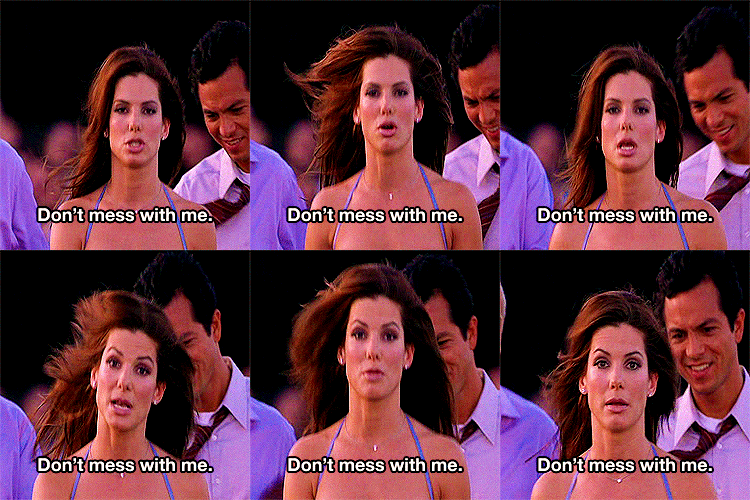
For actors, the way you walk is everything. If you are playing a Jane Austen character, you would walk straight-backed with soft steps so that you could show your status as a high-class woman regardless of your fortune. If you were playing a hardcore, inner-city girl who grew up on the mean streets, the stance would likely be wider with a bit of a strut to demonstrate that you're not to be messed with.

A Walking Example

For our prime example, let's use a movie character whose walk defined her, and how she changed it as the film went on. We're going to take a look at Gracie Hart from Miss Congeniality.

We all remember that scene where she leaves the restaurant with Victor and he remarks on her walk, "I haven't seen a walk like that since Jurassic Park." Her FBI walk is indeed very dinosaur-like with wide strides and an attitude that practically yells that she's not someone to trifle with.


After taking Victor's advice on gliding, and having a nothing less than miraculous makeover, Gracie is transformed from a hardened FBI agent to a smooth walking beauty pageant contestant. Look at her dramatic reveal and how she walks: she can easily pass for her undercover role (at least, for a short time).


Though she may have had physical changes she needs to stay undercover, if there's one thing that doesn't change, it's Gracie's attitude. She doesn't have as much of it on display as she does in her previous scenes, but she still has enough for anyone passersby to tell that there's more going on with her than just a pretty face. We'll return to Gracie later.

Walking Aggressively Without Drawing Attention

I'll use myself as the example this time. My walk prior to becoming a solo traveler was fairly confident due to my acting classes focusing on character physicality and runway modeling. I walked with purpose. After becoming a solo traveler, my friend Kiki described my current walk, and I quote: "you walk like you could kick someone and all their teeth would fall out."

Thanks, Kiki!

Her description of my walk does reference a type of aggression, which will bring us back to how to walk correctly. An aggressive walk would usually be visualized by Gracie Hart's FBI strides, but, in reality, it's much simpler than that. It is a normal walk with purpose and a subtly aggressive attitude. A normal walk is first described in the Merriam-Webster dictionary is to "move along by foot;" but when I actually looked this word up I found the third definition by the Farlex Free Dictionary, which is "to conduct oneself or behave in a particular manner." I would form my technique for an aggressive walk on these two definitions.

Now aggression doesn't necessarily need to be channeled into forcefulness or hyper-masculinity. Our friend the Merriam-Webster dictionary describes aggression as this for its primary definition of the word: "a forceful action or procedure (such as an unprovoked attack) especially when intended to dominate or master." The subtle aggression you want to employ would be simply to master your confidence and channel it into focused energy and confidence as you go. Walking like pre-FBI Hart is the example of how not to do that.


With that, channeling subtle aggression into positive energy is key to developing a strong walk. Now human beings are complicated, and everyone is going to have a different walk depending on how they were taught (like Jaime Dornan demonstrated), if they have any current or prior physical ailments, their environment, if they served in the military, had specific lifestyles or hobbies, or even if they're introverted, to name a few examples. Everyone is going to have a different approach to channeling their subtle aggression into their walk, but there are several areas you can focus on to create a strong walk.

Even if you already have what you believe is a strong walk, look at the points I will be making. There's almost always room for improvement, but if you already have a perfect walk, then more power to you.


The Business of Creating a Strong Walk

There will be several points I will be making in this list. For the record, these techniques are what worked for me. Feel free to try out my techniques, but it's very likely you'll be able to find better ones that suit you. If you do, feel free to leave comments at the bottom of my post because I would love to hear about that.

Since this portion will be focused on making your walk stronger, I would strongly suggest finding a gym or dance studio with floor length mirrors where you can observe the way you walk. You'd be surprised at what you see and what you may need to adjust!

#1: Posture

Right here is the most important part of your walk. These days, there is a greater problem involving posture due to excessive bending over phones. For the record, book lovers have had this issue for far longer, so the issue hasn't begun with cell phone users, it's just become more of a problem than before. To start improving your posture, pay attention to whether or not you hunch when you walk.

Preach it, Julie!

If you hunch or shlump at all, the most obvious thing to do is to start sitting straight. And yes, when you're not sitting straight, it does begin as a bit uncomfortable and offers much temptation to sit in a more comfortable position that isn't quite as great for your back. So here are a few ways you can correct your posture.

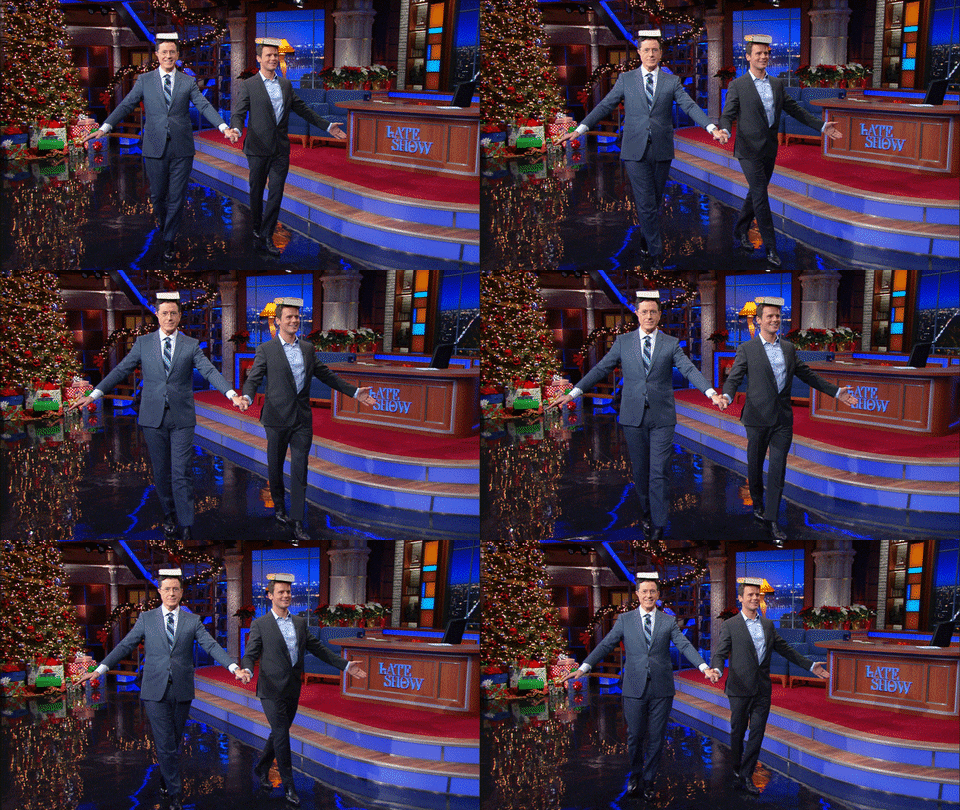
Balance a Book on Your Head

You've probably seen at least one movie where a girl is being primed to become more ladylike and is balancing various items on her head, particularly books. Believe it or not, this is a proven method.


If you want to try it for yourself, practice with a small book to begin, such as a hardcover children's book that's 50 pages or less. If this is too easy, select another book between 100-400 pages long and walk around your living area with the book on your head. When you walk with a correct posture, the book should remain relatively balanced.

Make sure that you don't start out with a book that's too heavy, because if you are about to travel, you don't want to cause any injuries, especially to your neck. Never practice with a book that is uncomfortably heavy; always stick with one that is a comfortable weight.

Back Braces or Corsets

Book balancing may be one of the most simple and effective ways to correct your posture, but sometimes you may need additional help depending on your physicality or any prior injuries. Back braces are a good alternative, but always make sure to consult with a doctor first as they should be adjusted properly to ensure they don't cause any issues.

If you don't suffer from any back ailments, you may want to try using a corset because they are easier to acquire than a back brace, and often cheaper.

Always make sure you have someone to help you properly cinch it

It's very hard to slump while wearing a corset as it covers most of the torso, so it offers support for most of the back, especially when sitting. Make sure it's secure but not too tight so that you can still breathe, and only wear it for a short amount of time if you're not used to wearing them. Try wearing one for 1-2 hours if you're new to wearing them; and if you have worn them before, only wear them for however long you're comfortable doing so. 

For more information on how to properly put on a corset, check out this link here.

Walking Backwards on a Treadmill

This one is a little risky, but in my personal experience, it is oddly practical. If you're lucky enough to have a private gym where you live, or a treadmill in your own home, you can practice at your leisure. However, if you only have access to a public gym, this may be a little off-putting with so many other people around; if you are uncomfortable trying this, then don't.

And please, be very careful!

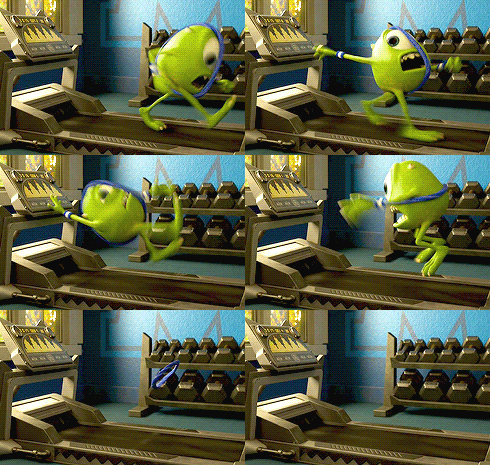
Please read this next part very carefully because walking a treadmill backwards can be tricky. If you try this and can't do it, then stop. Your safety is much more important. If you are adept enough to do this safely, then give it a try, but don't jump right in with the highest setting.

To start walking backwards safely, start the treadmill at a speed half of what you normally do. For example, if the speed you start your walks at is 2.5 MPH, go to 1.2 MPH as your backwards walk is naturally slower than your normal walk. Try this for a bit to ensure that you can walk backwards, then step off the belt onto the deck and turn around to make adjustments.

If you feel you can speed it up, make the speed gradual so you don't overdo it. Then up the incline by 0.5%. Walk this incline for however long you are comfortable, then raise the incline another 0.5% to 1%. Raise the incline 0.5% every few minutes until you reach 3%. If you can still walk backwards at a 3% incline without any issues, continue at that incline for the remainder of your session and ensure that your back is remaining straight as you go. If you're only comfortable at that incline for a short time, feel free to adjust downward to an incline that you walk best at.

The 3% incline is the lowest setting that can begin affecting your posture as you walk backwards. Feel free to raise the incline higher if you so choose. Once you're at a speed and incline you are secure in, continue to walk backwards for 10 minutes. You will notice that your posture will need to stay upright if you are going to walk like this.

Ease your way to slightly higher speeds and inclines if you wish to continue this technique. It will have a marked change on your back if you make it a habit in your workout.

Stiletto Heels

In this day and age, there's stilettos for everybody to wear. I personally hate wearing high heels, but if you want to correct your posture, wearing stiletto heels of a length at least 5 inches high, you will learn that slumping is not an option.

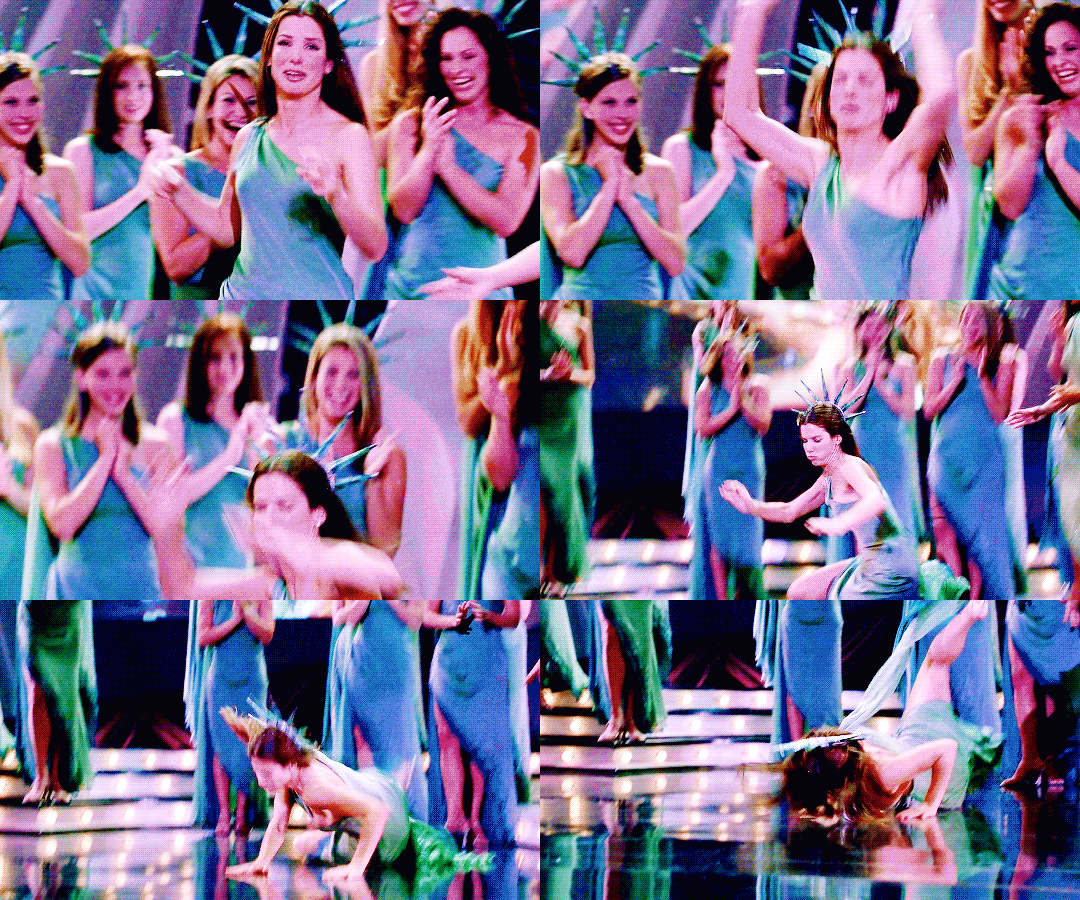
But you must practice, or you'll end up like Gracie!

As demonstrated with Gracie, practicing in heels is absolutely necessary in order to walk safely and to learn how to keep your balance when you walk. The ability to balance will also assist you in correcting your posture, so break out those kinky heels from your closet and take them out for a spin! You don't necessarily need to wear them out on the town but walk around your home in them if you feel so inclined. Just be careful on hardwood and linoleum floors.

Heels that are less than 5 inches or are thicker will work as well, but the stilettos will have the best desired effect on your posture and balance once master walking in them.

Talk to a military or modeling friends

Don't be afraid to ask for help if none of these previous techniques appear to work! That's the funny thing about walking; we don't really pay attention to how we do it until we need to adapt it or until someone points it out. Jaime Dornan very helpfully pointed this out in the clip I referenced earlier.

Thanks again, Jaime!

Sometimes a better way for anyone to learn is simply by watching and doing in real time as a visual and kinesthetic learner. If that's you, and you have any friends who served in any branch of the military or are runway models (or both, you'd be surprised at how many models I've come across who used to be in the military). Your military friends learned how to march, and runway models have likely undergone "boot camps" to earn their paychecks.

Trust me, this is harder work than you'd think

Both marching and runway modeling require perfect posture to be effective in their positions. Your friends with this type of training are your best mentors if you want to improve your stance.

#2: Strides

Congratulations, you've passed the first part of the course! Now that your walk has you moving along straight and tall, it's time to look at your strides. Back to Gracie Hart, her strides were so long that she walked like a dinosaur. Are your strides unusually long?


Or, do you shuffle along with small strides, taking double the number of steps a normal person would?


As it turns out, having an improper stride can cause physical damage to your legs. If you want to have the best possible walk that will not only make you appear confident but also give you the most stamina so that you can hike up your endurance for all the traveling you'll be doing, you do need to focus on how wide you're walking. The length of your strides can also determine how fast you walk.

I was doing research for this portion but found the absolutely perfect article to assist anyone looking to improve their strides. So, instead of plagiarizing, I'm going to link the article here. They cover every point I was going to make, so take a good look at it, especially the part of the article on "how to achieve a powerful stride without overstriding."


Take time to adapt your strides to a healthy pace and then watch how your speed adapts with it. It will make all the difference in the world.

#3: Attitude

It's been said before, and it will be said again: attitude is everything. Once you've mastered the posture and strides, your walk should look a little something like this:


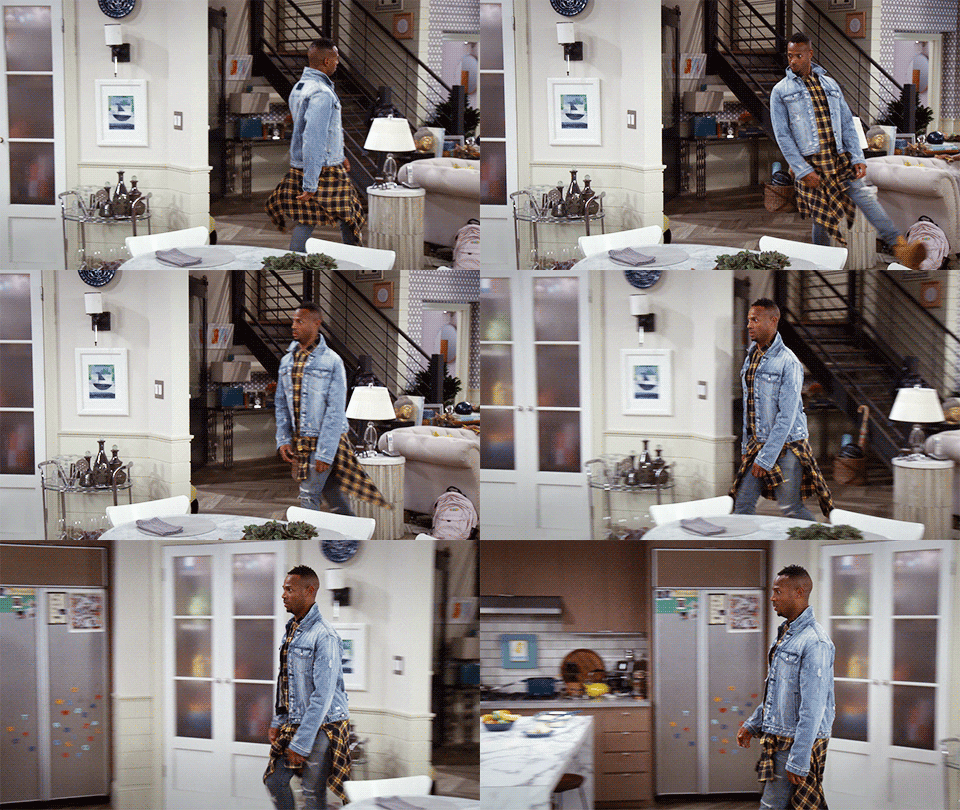
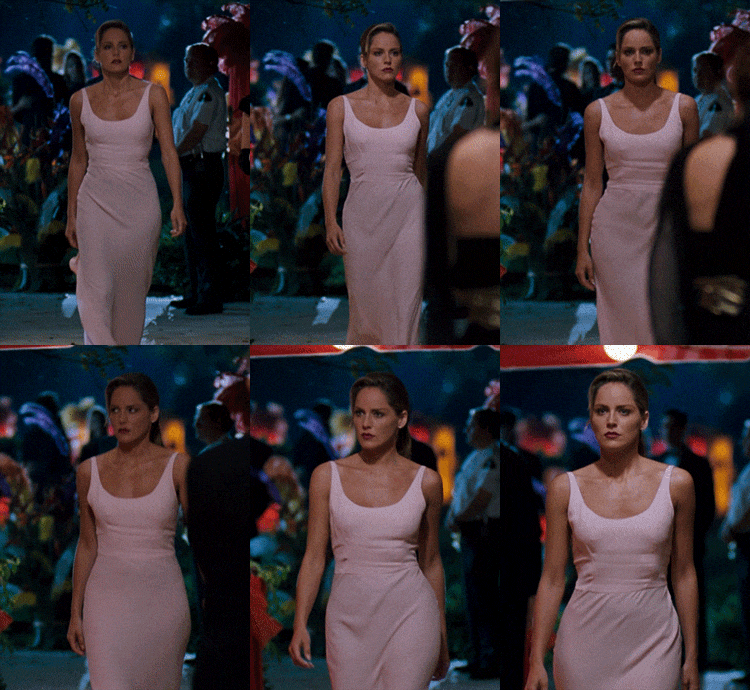
Our friend Sharon Stone here is employing our next point: the attitude. Channeling subtle aggression into positive energy is key to embodying a confident attitude. Notice how Sharon moves above: her posture is good, her arms swing naturally, her strides are perfect, her speed is natural, and she is clearly not a woman to be messed with. She exudes confidence as she scans the room, searching for her mark. This, dear readers, is the look we want to go for.


Gracie Hart, on the other hand, is a prime example of channeling a little too much aggression into her attitude. When working on your personal walk, you may want to use Gracie as a jumping off point as the extreme and scaling back to a more moderate look like Sharon Stone above. The difference between these two characters and their walks is not just based on the choices made by the actresses portraying them, but also by the energy they bring to the screen.

Actors, both on film and stage, require energy to provide an entertaining performance for their audience, and often participate in exercises before working to bring their natural energy up. An actor who has low energy tends to put forth a weaker performance, regardless of how talented they are. Positive energy comes from an ability to take control of your nerves and insecurities and mentally transforming them into power to fuel the actions you choose to take or the face you choose to wear to mask insecurities.

Harnessing this natural energy helps to build confidence. And when your walk is confident, you project a strong presence, and in the process you develop an attitude that isn't confrontational, but self-assured. You can conquer the world with an attitude like that!


Try This to Build Confidence

It's natural to struggle with confidence, so if you are one of these people, it's totally understandable; I used to have confidence issues myself. In my training to be a runway model, I had to develop a way to create a more confident walk. Then I remembered a dance class I'd taken years before where the instructor spent a session having us dance to various Michael Jackson songs. The song "The Way You Make Me Feel" was one that made me feel more confident.


When I began landing fashion show gigs, I used this song when I practiced walking for upcoming runway shows. I have another friend who does beauty pageants that uses another Michael Jackson song, "PYT," as her confidence song. It is my belief that there's a song out there for everyone that gives them an immense feeling of confidence in a unique way (although it doesn't necessarily need to be by Michael Jackson).

So, ask yourself, out of all your favorite songs or playlists, is there one that makes you feel more confident, strong, or sexy? If there is one, try listening to it with headphones or earbuds and just feel the song. Try it in private, then try it in public. Heck, I tried it as a social experiment when walking through the gym, and even though I wasn't in great shape, several guys noticed and watched me as I walked while listening to that song.

Rock that song wherever you go!

Always remember that your strong walk won't be complete without a confident attitude. It really is everything.

#4: Focus

Now that you have the skills to put forth a strong walk, there's one more thing that needs to be added: focus. One of the things about having a good walk is that even if you do it right, if you are unfocused it can completely invalidate the confident look you're going for. No matter how confident you are, if you don't know where you're going, it will affect your walk.

It's easy to develop your walking method in an area where you live or are familiar with, so it's best to start out there. Ultimately, it's when you're in an unfamiliar place that your confidence, and thus your walk, begins to wane. This is where you need to focus not on your walk, but on your surroundings.


When traveling by yourself, it's when you're not paying attention that you're most vulnerable.

Fake It Till You Make It

The first time I traveled by myself to Ireland, my natural instinct was to look for anything recognizable when I walked around. I soon found that as I looked down the road I was walking on to reach my destination, I was looking a bit too far out, and I was coming off as too focused, which could also attract attention. So I lowered my sight and focused on my current path.


What I discovered was that when I wasn't quite sure where I was, it was important to simply look like I did. So, instead of keeping my gaze high above everyone else, I looked to the upcoming curb. I kept my eyes up but walked with purpose to reach the edge of the sidewalk to the crosswalk. And when I continued walking, I focused on the next upcoming curb while taking note of any businesses or notable landmarks to mark my position.

It doesn't matter if you don't know where you're going; if you are focused on your path, even to just the end of the street, then you can maintain your confident walk. By focusing on what is coming in your path, you are non-verbally communicating that you know where you're going, though no one will know that it's just to the curb. It's a simple method that makes all the difference in the world.

Put the Cell Phone Away

One the best ways for you to lose focus and become distracted is when you're walking with your cell phone in hand. Friends, when you are traveling alone in an unfamiliar area, this is one of the worst things you can do. Distracted walkers make easy prey, and you are not prey. There's nothing wrong with stopping to take pictures of the landscape or a selfie at a notable landmark, but you need to ensure you're not in anyone's way. If you need to access your phone, get out of the way.

Do NOT let this happen to you!

Your personal safety is far more important than messaging anyone or checking social media. If you need to use your phone for maps or directions, find a coffee shop or a bar. 

Do not allow yourself to become distracted by anything when traveling by yourself. Keep your focus on where you're going, even if it's to the end of the street, and keep going. 

#5: If all else fails, try this

Skipping.


I'm being completely serious here. If you're unable to adapt your walk and you feel threatened, just start skipping. You may look like a fool, but you'll get everyone's attention, so if anything happens, there will be witnesses and odds are pretty high someone will step in to assist. If not, you'll probably weird out whoever it is that could be a threat.

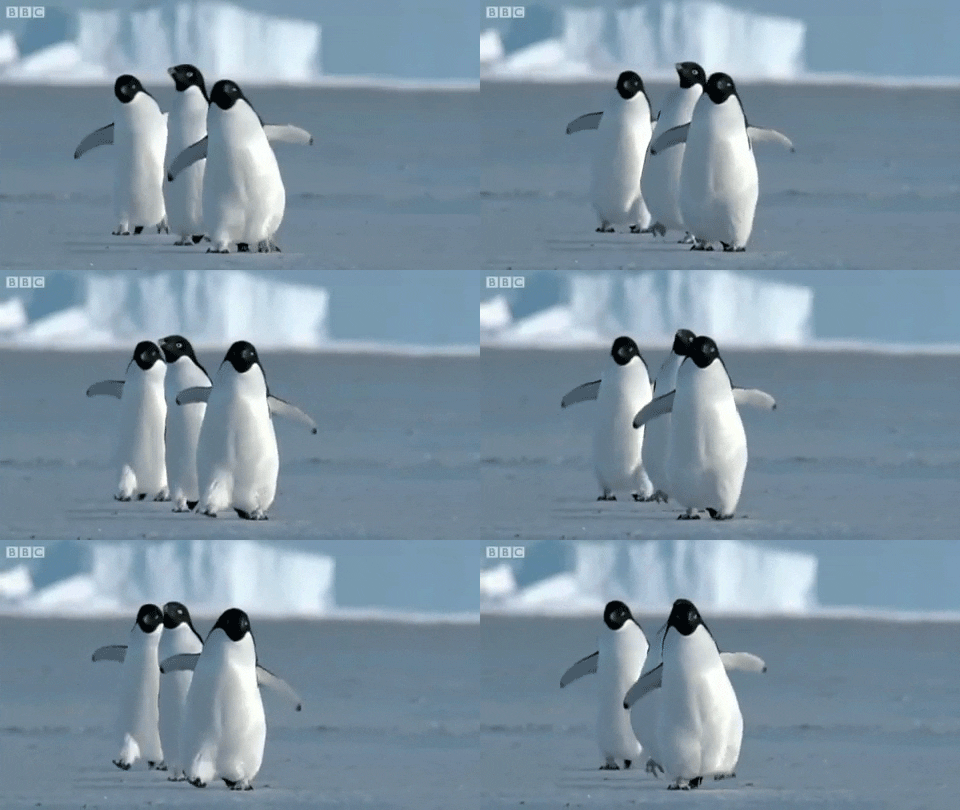
A person who's unafraid to skip in public is too crazy to mess with!

The Last Step

I covered a lot in this blog, and all for a daily activity that we all probably do (love to any disabled readers out there). It really is strange at how much your walk can define you, and even more how it can change you as a person. Yes, you may have to do some unorthodox or even silly exercises to perfect your walk, but believe me, it can mean everything regarding your safety.


You may also find that in training yourself to walk boldly that you will discover how bold or ridiculous you can be. Embrace the wackiness as you walk! When you're not afraid to look crazy, you'll find that you're unafraid to try things you never thought you'd do before. Be bold, be big, and do everything 100%. Your personal growth may surprise you!

After reading this long post, if you're going to take away the bare minimum, remember these three things to apply to your walk above all else:

1. Attitude is everything.
2. Don't allow yourself to be distracted.
3. You are not prey.

Now get out there and take on the world!

Coming Up Next....

I decided to go a little crazy and book a trip to Dublin, Ireland for St. Patrick's Day! This was a literal last-minute decision, so I've decided to do a travel log to bring updates on the festivities! It'll be interesting with all this Coronavirus stuff going around, but personally, I'm more scared of being hit by a texting driver than contracting that virus.

So, keep an eye out! I'm not sure how much time I'll have to post or what specifically I'll be discussing, but anything I post will likely be short and including pictures. And if I do come across any fun stories or any other travel hacks I hadn't known before, I'll be sure to share them here.


Until then, walk strong!

Images courtesy of Giphy.